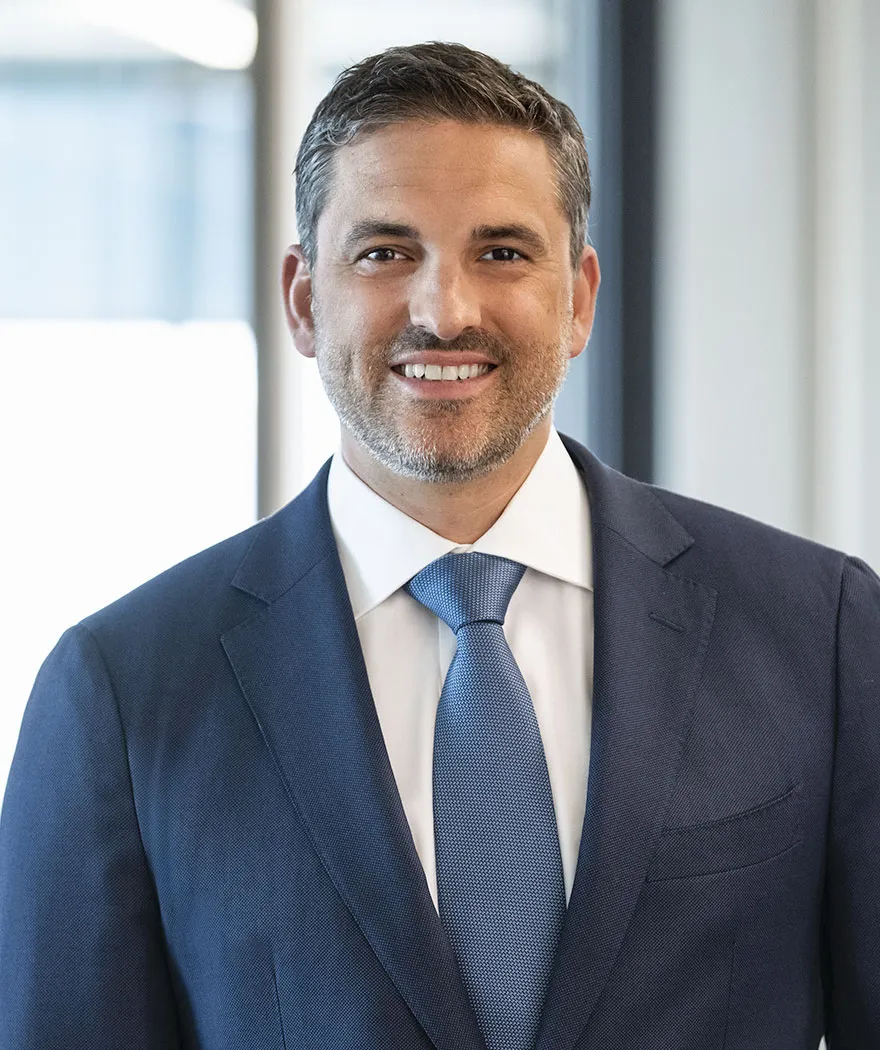
“I don't think that increase in credit stress metrics is the result of fundamental company operating performance. What we have seen is companies performing well, economic growth, pricing power, sustainable margins,” said Brian Stewart, Global Co-Head of Corporate Credit on Bloomberg TV. “But it is reflective of a very large amount of growth in the industry and of the issues that are inherent in private credit and direct lending catching up with the amount of activity that's been in the market in the last few years.”
Brian joined Bloomberg’s Dani Burger to discuss the impact of wider spreads, the significant volume of AI-related financing, and default and “shadow default” rates.
Transcript
Dani Burger, Bloomberg
Isabel, elsewhere, the credit market is showing early signs that it's maybe approaching the limits of how much more debt it can absorb as AI players rush to meet the enormous demand for data center deals. More than 30 bankers, money managers, private equity executives, and others telling the team at Bloomberg that raising cash has become significantly more difficult than it was just months ago. Pleased to say that joining me now in the Dallas studio is Brian Stewart, global co-head of corporate credit at Fortress. Brian, thanks for joining, or maybe I should say thanks for having me in your city. Great to see you.
Brian Stewart
Thanks for being here.
Dani Burger, Bloomberg
And the amount of issuance has been stunning, regardless of where you look, if you just look at investment grade US issuance, it hit a record just earlier this week. Is there a point where considering all of the issuance coming from AI hyperscalers and spenders, that this market does have a more serious problem in absorbing all of it?
Brian Stewart
I think the short answer is yes. Just sort of taking a step back. Fortress as an alternative credit manager has so far kind of, we've sort of been on the sidelines of the AI capital race. It's predominantly been a venture capital growth equity and investment grade bond sort of cycle, which we're watching closely. We made some investments, kind of picks and shovels plays around that CapEx theme, but so far it's not been kind of core to our investment strategies. What we are really focused on, to your point, is the amount of issuance. If you look at the amount of credit issued for AI CapEx this year, I see estimates it's about $500 billion, which is an enormous number. expected to grow next year. And if you just look at the investment grade bond piece of that, about 250 billion this year would make it about 15% of total issuance, which should grow to something north of 400 billion next year. And so that is an enormous part of the market. It's also one industry within the market. So if you think about from the portfolio manager's perspective, building a portfolio of diversified fixed income securities, there is a limit to how much of that you can own. And as we look at this sort of continued pipeline of issuance next year, I think there is a point where the market is relatively full and the only way to create capacity is through additional spread widening.
Dani Burger, Bloomberg
Well, something that the team has talked about as we work through that. I spoke to your colleague, Drew McKnight in LA about this idea. And others have said it at Fortress that basically this is asymmetric. You have capped outside but full downside. And I wonder what that actually means in practice. You've stayed away from some more of the risky stuff because what is your sort of understanding of what happens if you have like a data center that's financed and it becomes obsolete in a few years time? Like how would something like that play out?
Brian Stewart
We don't know. And there's ideas around what would you do with a data center if sort of the economic model that's put in place supporting it today doesn't work. What happens if the GPU residual values are different than people are modeling at this point in time? But I think from the perspective of a credit investor that has capped upside, best case scenario, we get a coupon and we get our money back, but sort of unlimited downside to 0, that degree of uncertainty is something that we haven't felt the need to lean into at this point. Now, As we look forward and we look at the amount of credit that's been created in the sector and perhaps a shifting of sentiment around a lot of that credit, that may evolve into a more opportunistic investment environment where the opportunity to make upside commensurate with uncertainty on the downside is a more balanced equation.
Dani Burger, Bloomberg
Oh, that's interesting. So the spread widening phenomenon we're seeing could at some point be actually an attractive entry point. What is that? Is there a certain level that you look for that signifies that things are being priced correctly for the risk you'd be taking?
Brian Stewart
We think about upside and downside severity. And certainly if something's trading at 50 cents on the dollar, it is less risky than when it was issued at par and you have a more symmetric return profile and to double your money. And if you're wrong, you could lose money. But if you build a portfolio in that manner, you've created upside convexity. And that becomes very interesting. And I think that's where a view on those types of risks that you identified that are fairly uncertain at this point of time sort of makes sense to express in the marketplace.
Dani Burger, Bloomberg
More widely, though, as we go through this period of intense competition for capital, is this redlining contained? Does it stay contained in the AI ecosystem, or could it sort of seep into the rest of the credit universe?
Brian Stewart
It's hard to see it staying contained because the volume of issuance is so large. If you talk about one particular sector occupying more than 15% of the market issuance this year and growing next year, that's a very large number. And if you start to think about what happens if there's a change in sentiment and some of that spreads widen means mark-to-market losses occur in those portfolios, And if there's downgrades, then you have a very large amount of investment grade paper that becomes high yield paper, and that needs to change hands. So it's hard to see that amount of credit that's been created in one sector sort of not impacting credit availability in other sectors.
Dani Burger, Bloomberg
Is this coming at maybe what might be a very poor time? Because I know this is something you've been thinking about, this idea of shadow defaults. use of pick, amend and pretend that otherwise could have been defaults but aren't really logged as such. When you look at the universe, do you have a figure in mind as to what the true default rate looks like? How are you thinking about just the status of private credit right now in its health?
Brian Stewart
Yeah, I mean, I think the reported numbers in private credit are default rates in the low single digits, 2, 3%. And if you look at it much longer, period of time across leveraged corporate credit, that is below average. But when you look at the evolution of documents and structures and flexibility that borrowers have, there's a lot of flexibility to prolong or avoid default. So if you had documentation from 15 or 20 years ago on the credit that's out today, you'd probably have a default rate that's more like 5% or 6%, which isn't really surprising. The shadow default sort of captures that. You look at assets that have exercised pick options where interest have been amended or where there's been considerable markdowns as sort of pending or similar to default. And that number, I think, has been tracking closer to 15%. And that's not to say that the default rate will come to 15%. It's just sort of a reflection of that mismatch between the definition of default and some of the credit that's out there today. That being said, I don't think that increase in credit stress metric is the result of fundamental company operating performance. What we have seen is companies performing well, economic growth. pricing power, sustainable margins, but it is reflective of a very large amount of growth in the industry and sort of the issues that are inherent in private credit and direct lending sort of catching up with the amount of activity that's been in the market in the last few years.
Dani Burger, Bloomberg
Brian, not enough time. We're going to have to do this again so we can get more into that subject itself. I'm holding you to it. Brian Stewart of Fortress.