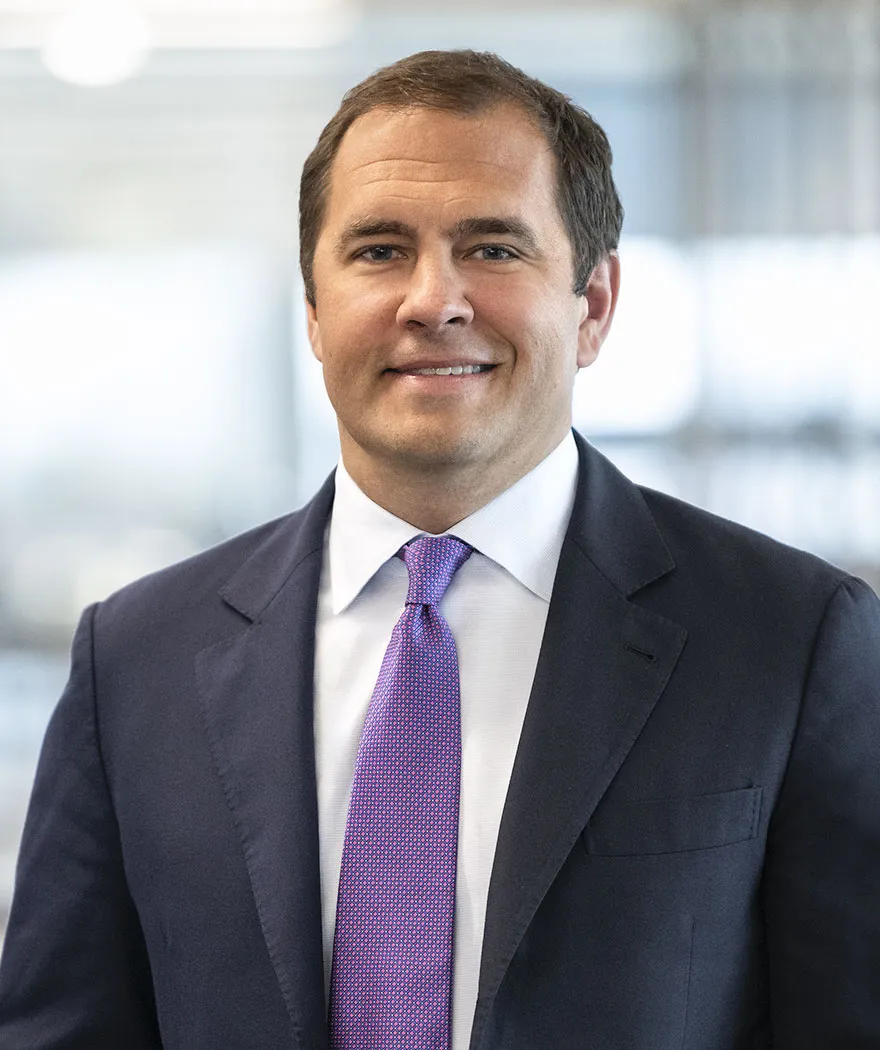
How might a complex macro environment impact credit over the medium term? Drew McKnight, Fortress Co-CEO and Managing Partner, discussed this question and more in an interview with Bloomberg TV’s Dani Burger at the recent CAIS Summit.
Transcript
Speaker 1
Time now for the big picture of Bloomberg's Danny Berger, sent down this week at the CAIS Summit with Drew McKnight. He is Fortress's Co CEO and managing partner, and they spoke about the capital needed for data centers, private credit investments and potential company restructuring and defaults. Take a listen.
Dani Burger, Bloomberg
Your Co-CEO Jack Newmark a few weeks ago was ringing the alarm for private credit investors around AI. He specifically said you're not getting paid for that upside for the risk. And I wonder as you see it today, what is the FOMO trade around AI and data centers look like? Is it something that also concerns you?
Drew McKnight
Well, I think we can be believers in AI and believers in ultimately being winners. The problem is with credit, you're not paid for that upside, right? The equity captures the upside, while the credit has the downside. So, I think where we struggle with some of these large investments is not that they're all not going to work, it's that your winners can't pay for your losers. And I think when we think about credit, we really think about downside protection and downside mitigation.
Dani Burger, Bloomberg
Isn't that the point of credit too? It's not like VC where you can take big swings for the fences. Some of them miss, some of them don't, and you have a problem. Wasn't that kind of like the original sin of software, that everyone put their eggs in this basket of software? And when you have some that don't play out, it's painful. Are we kind of repeating the same mistakes of people who are overweighting AI?
Drew McKnight
That's what we worry about and you know, think about just the sheer magnitude of capital needed for this data center buildout and it's immense. I think where we struggle, is just where your winners are not going to pay for your losers on the credit side. You're going to have plenty of big winners on the equity side, but I think on the credit side you are going to have some, some losers. That's where we struggle with, you know, how you position that and how you size that in a portfolio.
Dani Burger, Bloomberg
Is there anywhere specifically in the ecosystem that concerns you?
Drew McKnight
Look, I, I think it's again, it's just the sheer magnitude. I think you've seen with Oracle in New Mexico and that force majeure that got a lot of attention last month. You know, there's a reason these big companies are actually structuring the way they are. It's not it's not an accident that they're structuring them with the ability to walk away. That's where we struggle.
Dani Burger, Bloomberg
Jamie Dimon in his earnings call just recently basically said that they're tightening their lending standards. He wasn't talking about AI specifically but broadly was saying he's tightening lending standards. And I wonder if there's a corollary here. If you've seen because of the demand for capital and everyone who wants to put money to work in this environment, if you have seen underwriting standards start to slip a bit and if things need to be tightened up more generally.
Drew McKnight
I don't know that we've seen underwriting standards slip. I think that the macro environment is very difficult. On a headline level, you've got very high GDP because of all this data center and CapEx build out, but I think it will look underneath the hood with inflation, with tariffs, with diesel and energy prices, you've got a lot of stress in the system. I think that's where you start to see the rubber hit the road and I think you will start to see, you know, some companies go through defaults.
Dani Burger, Bloomberg
Is that an opportunity for you?
Drew McKnight
Look, we think credit volatility is an opportunity. We think it's an ability to actually differentiate ourselves in terms of what our credit process is, what our asset management process is and working through some of that volatility.
Dani Burger
So where do you see that most acutely that you can jump in that volatility becomes a beneficiary to you.
Drew McKnight
I mean, the hardest part right now within credit is just the lack of deal flow. I think outside of the data center space we really have I think LBOs are down 50% year over year. So that's something that I think from our perspective, there's a lot of capital on the sidelines both on the private equity side and the private credit side. The real issue is the bid-ask on the equity side in terms of where folks will actually transact.
Dani Burger, Bloomberg
Are you concerned that that doesn't get solved, considering the macro environment? That rates are likely going to stay high, if not higher from this Federal Reserve?
Drew McKnight
Look, what we keep hearing from LPs is, is on DPI and distributions on the equity side, I think that’s only going to increase with the lack of deal flow and so I have to think eventually the GPs will start to listen to their LPs and start to actually find liquidity. You’ve obviously seen the secondary market grow massively and I think that's only going to extend.
Dani Burger, Bloomberg
The SEC the other week issued this warning and basically said this boilerplate language warning about valuations and growing PIKs, saying that you need to have more transparency to your investor base. Does this industry have a transparency problem? Was that warning needed from the SEC?
Drew McKnight
Look, I think transparency is a good thing. I think regulation is a good thing. I think disclosure on PIKs is something that should be. We, we think that it’s actually pretty adequate right now. That said, I think more disclosure and more transparency is a good thing for the market and a good thing for the wealth market.
Dani Burger, Bloomberg
Well, I think part of the reason that a lot of people are concerned about it at this moment is are we entering something with elevated defaults and just how transparent are firms being about this? PIMCO basically said the default rate among private credit is much higher than it appears on the surface. To what degree are we starting to go through cycle that's maybe not apparent because of some of the opacity of the industry?
Drew McKnight
Look, I don't know that it's opacity. I think from an asset management perspective on the private credit side, one of the positives is you can amend - because you might be the sole lender, you might be one of a handful of lenders - you can amend documents relatively easily. That also allows for flexibility in situations. And so, it may not be amending a document to avoid a default or hide a default, but it's amending a document to allow flexibility to the underlying borrower. That said, I do think the stress in the underlying economy is real and I think you are seeing elevated - whether they're restructuring defaults, amendments, we are absolutely seeing that.
Dani Burger, Bloomberg
I was going to say some people might call it can kicking also. That could be the skeptics take as to what you're describing. How elevated is what you're talking about some of the restructurings and amendments to historical terms.
Drew McKnight
It’s hard to say. I think we're seeing broadly in the market call it 5% defaults and I think that is creeping higher, which is obviously a lot higher than what I think is being advertised publicly. But also these defaults and these restructurings aren't necessarily a bad thing. I think the one thing that will make it a case for private credit and we talked about private equity and the lack of distributions. I think private credit generally has performed for LPs and we're hearing from our investors between the distributions that they're actually quite happy with what we're doing. And I think, if you take a step back and say where private equity fits, where private credit fits, private credit has done what we've said we were going to do. You know, by and large over the past year, 5 to 10 years and I think even with this default cycle, it's actually an ability to demonstrate that. And, and you know, the positive with credit is that when you have defaults, you still can have quite high recoveries, right. And that's, and that's what I think really is the case for private credit.
Dani Burger, Bloomberg
Is that going to be even across the board, though, do you expect some true losers as we go through this cycle?
Drew McKnight
Look, you’re going to have defaults, you're going to have losses and you don't get everything right. I think the real differentiation is going to be the concentration, right? If software was 25-30% of the market in, in 2025, if you're 50 or 60% software and you were overweight software, that's likely to be a problem. And, and I think conversely, if you're 5 or 6% software, you're probably going to emerge on your front foot. And that's, from our perspective is, is something we want to lean into.
Dani Burger, Bloomberg
That seems like a problem because there are quite a few firms and prominent ones that are all software. That is all they do. And they've said that their companies are still surviving. Their cash flows still look good. Do you expect that to run out at some point? Are those sector specialists going to enter a period of struggling?
Drew McKnight
Look, it's hard to know. I think you also have that differentiation between equity and credit, right? You can have, on the software side, you can have some of your winners pay for your losers on the equity side. I think on the credit side, you only need to have a handful of losers if you take real defaults and real losses. It's hard to make up for that because the problem on the credit side is your best performers are going to earn you a 1.2, 1.3 multiple because you get called away relatively quickly. If you take, you know, 40 or 50 or 60 cent losses on a portfolio, it starts to pile up.
Dani Burger, Bloomberg
Taking that and almost going back to where we started, I would love to just finish on this idea of where you find that diversification. If basically all the deals coming right now are AI related, but you need to be more diversified, you can't make the mistakes of credit, the deal flow isn't happening. How do you make sure that your portfolio is adequately set up for this environment?
Drew McKnight
Look, I think one of the, one of the things that we've really tried to focus on is, is sizing our portfolios and sizing our funds for the opportunity set. I think when people take a step back and they look at the wealth space, you know, and BDCs have obviously been a focus with private credit over the past year. The structures have held up. The 5% gates were, was the way they were structured on the way in. I think that the part that we've been a little bit more thoughtful around is how quickly you take money in, right? And so, if you take money in as fast as investors will give it to you and you just go by the market, well, in 2025 you were forced to be overweight software. I think, as people think about building out their portfolios, maybe, maybe taking money in over a longer period of time, similar to the way they're paying out the, you know, the, the redemptions over a longer period of time is a healthier way to invest a portfolio.
Speaker 1
And that was true. McKnight Fortress Co CEO and managing partner, speaking with Dani Burger at the CAIS Summit.