“If there's any doubt in anyone's mind that productivity is not going to pay out in the next 12 months, why would you be in the equity? You’d want to be in credit.”
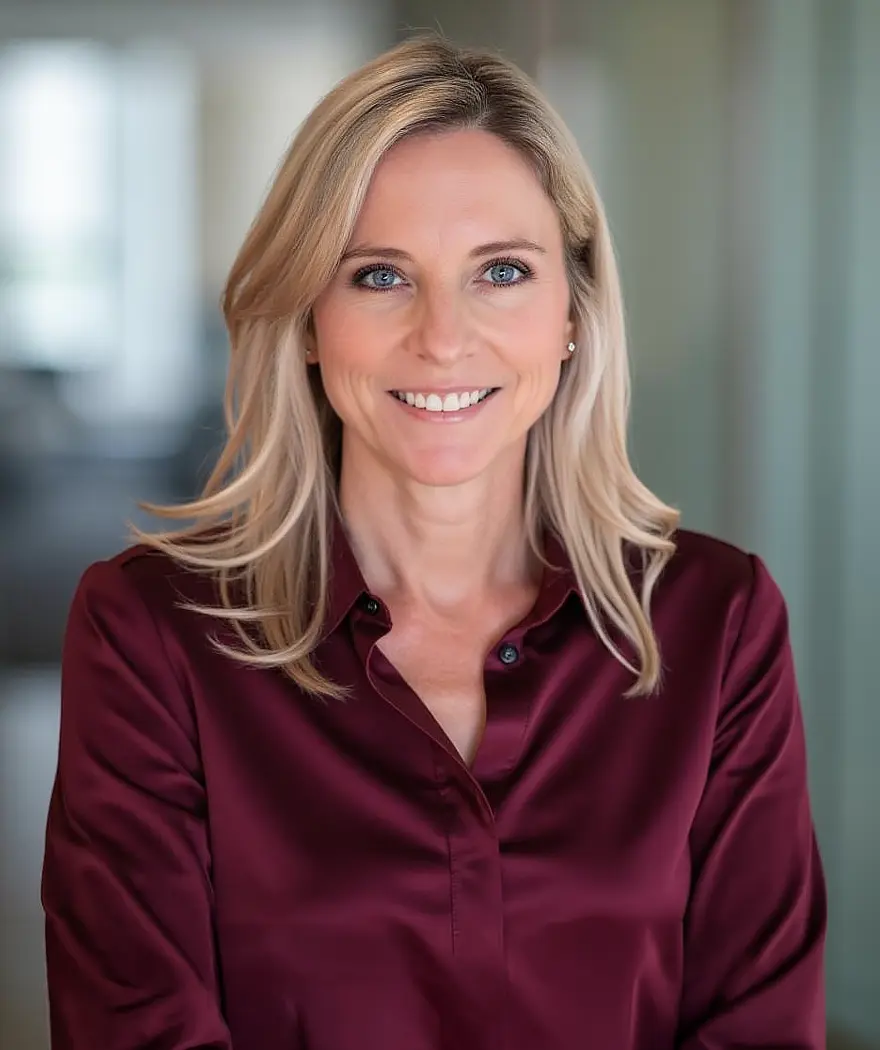
Fortress Investment Group Chief Strategist Elizabeth Burton joined Brian Sullivan and Kelly Evans on CNBC recently to debate the growing disappointment in AI capex and lack of productivity, the Fed, the impact of higher rates on businesses, and opportunities in credit.
Transcript
Kelly Evans, CNBC
Let's bring in Elizabeth Burton to make sense of it all. She's the Chief Strategist at Fortress. It's great to see you again.
Elizabeth Burton
Good to see you.
Kelly Evans, CNBC
It seems like all that matters are CapEx numbers in these earnings still. But what do you think matters? I guess it turns out Anthropic's filing matters too, when it gives us that level of detail about the return on its business and so forth.
Elizabeth Burton
Yeah, I mean, we've seen this before in the last year or so where things tend to jump around around earnings. And good news can be bad news and bad news can be bad news. But there's a lot to kind of look through. But I do think one of the main risks that we see in the markets is this disappointment on maybe CapEx spend and AI and the productivity results coming from it.
Kelly Evans, CNBC
So, you think the disappointment could be that the spending is there, but the results are not, or that they start to even pull in the capex? Because we can't talk about that yet. So I understand that that's years from now.
Elizabeth Burton
The CapEx spending pulling back?
Kelly Evans, CNBC
That they would even pull it in, yeah.
Elizabeth Burton
So I think that, back in March and April, we were talking about what the CapEx numbers might be and if those would change, that was a greater worry then. But I think now we're thinking about how does this translate into earnings and dollars and revenue. But any sort of reason to look for a hiccup, I think that's what investors are looking for right now and getting a little bit more cautious. You've seen risk indicators pull back in just the last two weeks where they've been kind of frothy throughout the last six months.
Brian Sullivan, CNBC
S&P 500 hasn't done, I think the technical term is squat, in about 3 months. It's pretty much the same price as it was in early August. I think people are waiting on the elections. We'll see what happens. I know you're not super bullish. I heard you a couple of weeks ago on this fine network. Not super bullish on equities. What's it going to take, though, to get you more interested in equities?
Elizabeth Burton
I'm not not bullish on equities. I would just say that I'm more measured here. I mean, so you think about the S&P up through year-to-date, up through September at 14, 7% of that is AI. So there's a large component of that being driven by a single theme and really just a single company that's not even public yet. So, I think that there's some precarious positioning in there. I wouldn't bet against AI for sure. But when I think about S&P in general, if you look at earnings, and the equity risk premium you're getting, essentially you can get 5% in bonds or you can get an extra quarter of a point in yield in equities. Like why would you gamble on that 0.25? That doesn't make a lot of sense to me. At this point in the cycle, I'd be looking for additional ways to protect my portfolio.
Kelly Evans, CNBC
Do you have a strong point of view on kind of what the Fed does? Do you and your dad ever debate these things, by the way?
Elizabeth Burton
Three or four times a day, all the way back and forth. Yes. And he's like, you can't say that.
Kelly Evans, CNBC
So, what do you think about kind of the wisdom of another rate hike and the likelihood of another hike or two here?
Elizabeth Burton
Look, I really like Kevin Warsh. I think he should have hiked in July. I think that with 9% odds, which I just saw on your screen a moment ago, there is no reason for 9% being hike odds for tomorrow unless we're getting forward guidance. So, newsflash, we've been getting forward guidance, even if it's not coming from the Fed Chair. It's coming from, you know, the two other most important members of the Fed.
Brian Sullivan, CNBC
Are they giving guidance or are they giving their opinion? That's what I don't know. Because if it's their opinion, it may be different than what the Fed Chair thinks.
Elizabeth Burton
That is true, but maybe they're giving guidance on their opinion, let's say. But let's also say that we've got 12 independent voters now. The only real reason that I can think why they wouldn't hike, maybe there was some communication last month where Warsh said, I'll skip the next meeting if you're on my side for this one, right, you hike now. That's really backing yourself into a corner right now, because the data has not changed since July when he told us that he was going to be data dependent. Nothing has really gotten better or worse. We've seen more of the same. You can read into the markets anything you want, but labor looks about the same, if not a little bit crackier. You've got PPI, you've got PCE. These are all PCE, CPI above 3.
Brian Sullivan, CNBC
So let me go back to my previous question then. Can the stock market not rally? What is this, a double negative? Will it take lower rates for the stock market to rally? Like, is the Fed in charge of the equity market now, or is it still the AI story? Is that a better question?
Elizabeth Burton
I think it kind of depends. We've seen it shift back and forth throughout the year, and I think it's all things kind of in one. You know, we were just talking two weeks ago, are these rate levels too difficult for the equity market? And my answer there was no, that they're not. So we could get another 100 basis points in rates, and we might not see cracks in the equity market happening.
Kelly Evans, CNBC
And I'm just curious, I mean, not to speak to Fortress's positioning in this too, too much, but I'd love to hear about, I mean, like, is there more opportunity? Look what Rick Rieder is talking about this week, right? The most opportunity he's seen in the credit markets almost in his entire career. And I'm just curious if you kind of weigh in on that.
Elizabeth Burton
Yeah, I think that we're really excited about the opportunities in the credit markets, right? In real estate credit and in corporate credit, there should be a lot. One, we've got a maturity wall upcoming. Two, I think we're seeing when we talk to our partners, we're seeing that folks that thought they were going to wait on a realization when hoping rates were going to come back down. They're not coming back down. Now they're like, well, I'm not going to kick the can. Maybe we actually have to transact here. So I think there is a real opportunity. And actually it doesn't need a recession to have like a pretty good distress cycle. We're seeing more credits that are getting stressed and that creates opportunity. So I think it's a really good setup for that. I certainly would say it's not a great setup for private equity. If anything in private markets and real estate and credit, it's an opportunity there.
Kelly Evans, CNBC
And just to restate that, the reason why, and this is on the front page of the Wall Street Journal today, but high rates are just taking their toll on a lot of businesses that were bought during the low-rate era in software, a lot of concentrated bets there.
Elizabeth Burton
I think that's right. And then the last thing I'll say without getting too in the weeds on economics here, but if there's any doubt in anyone's mind that productivity is not going to pay out in the next 12 months, why would you be in the equity? You’d want to be in credit, right? I would just want to be in a more senior part of the capital structure there, rather than having all my eggs in one basket, because then you've got more than just one story.
Brian Sullivan, CNBC
All right, Elizabeth, sit tight for one second, because I'm going to follow up, but I've got a, it's called the bond report. And speaking of technology, there's a report out that Meta's $25 billion stock sale, stock sale ended five times oversubscribed. Why are we talking about a stock sale in the bond report? Because normally companies have been issuing debt to pay for their AI hopes and dreams. Now, Elizabeth Burton, I know you're not a Meta person. We're not asking you specifically about Meta, but maybe do you expect to see more equity starting to pay for the trillions in spending? Because it's been a debt story largely until now.
Elizabeth Burton
I'm going to punt on your question and answer a different one. I would say you're going to see a broadening out of where you're getting the financing from. So, I don't know if it's debt or equity, but you're going to see more locations, not just the US, start kicking into being a participant there. I think that has to happen.
Brian Sullivan, CNBC
What, Europe? They're going to find money somewhere.
Elizabeth Burton
You've seen some of them, Canada.
Brian Sullivan, CNBC
Where are they getting the money? They're broke.
Elizabeth Burton
I'm not going to beat up on Europe today. I feel like the news headlines are doing a good enough job of that. But I do think you'll have to see a broadening out from more places. There was a comment from one of our clients that I saw on a note earlier that said they're worried about the amount of supply that needs to happen. And I'm not worried about supply coming to market. Do you remember when gluten-free was a big thing and you'd go to the carts in New York and they're like, our bananas are gluten-free? You're going to start to see people that shouldn't be trafficking in this start to get a piece of it and start to play a part.
Kelly Evans, CNBC
That's the problem with bananas. They are gluten-free.
Elizabeth Burton
They are gluten-free.
Kelly Evans, CNBC
Yeah, but they're just not advertised.
Elizabeth Burton
This chair is gluten-free. We should eat that, too.
Brian Sullivan, CNBC
You like pleather?
Elizabeth Burton
Oh, are you trying to get me in trouble with animal activists?
Kelly Evans, CNBC
No.
Brian Sullivan, CNBC
That's my goal, Elizabeth Burton, is to get you in trouble.
Elizabeth Burton
Thank you. Great job.
Kelly Evans, CNBC
Thank you for joining us. Liz Burton, Chief Strategist at Fortress, if we didn't say.