Friday’s nonfarm payroll data showed the US unexpectedly lost jobs in July.
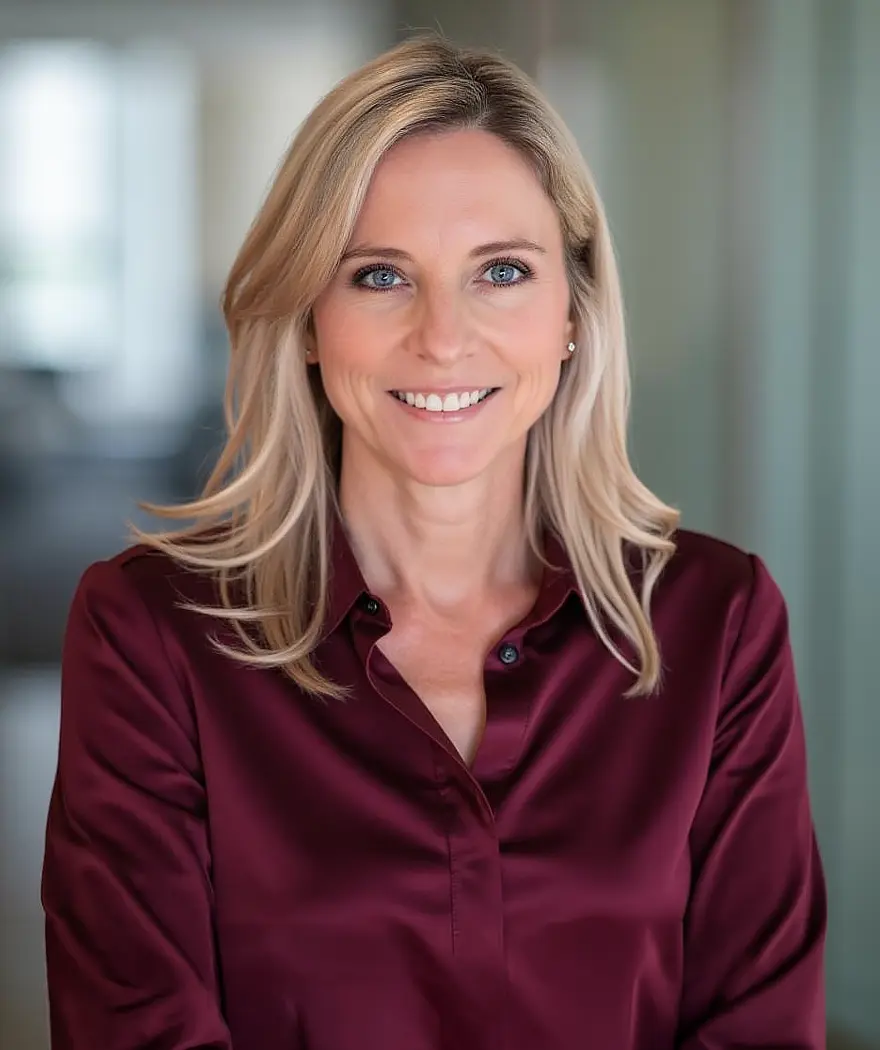
Last Monday, Fortress Chief Investment Strategist Elizabeth Burton joined CNBC’s Closing Bell with Scott Wapner to share her thoughts on the upcoming data release.
“I also don't know that the labor picture is as rosy as it seems to be. I don't think labor is terrible, but it was really convenient to say I don't have to worry about labor when labor seemed to be fine,” she noted.
She continued, “I think inflation is a problem, and I think that saying that the bond market can fix it themself may not necessarily be the right way to go here … that's what you're seeing playing out in yields.”
Watch the full interview for Elizabeth’s views on how she’d position portfolios in today’s markets.
Transcript
Welcome back. Stocks are starting August off strong as more earnings and the jobs report now looms. For more on where the markets are heading in the weeks ahead, we're joined by Elizabeth Burton of Fortress Investment Group. Welcome back. It's nice to see you.
Nice to see you.
Okay. So you sat down and you said I am a credit person over equity. That's where I got my cut my teeth, which is why I suppose you told our producers credit over equities, and it's not even close. Why?
I don't think it's close. It's part of where we are right now in the cycle. I'd rather be working, with those that are lending out the credit than be on the other end, and I'd rather be in a better protected position, especially with where equities are right now. But I also think that the macro doesn't have to be right for you to make money, at least in private credit right now. I think it's setting up a pretty interesting opportunity set for investors.
You say the credit gives the cushion to be wrong on the macro. Explain.
It does. It does give a cushion. So, part of my thesis is that I think that inflation is underpriced here. I think rates are going higher here.
Okay.
And I think that floating rate credit specifically, whether public or private, but floating rate credit is really a much safer place to be. And you don't necessarily have to get macro right. I know that, you know, that the lenders and the borrowers are on both sides of that trade when rates go higher. But I think in general, you want to be a place where rates can reset at a higher level.
Why do you think rates are going to continue to go up?
Well, I think part of it in this last week has been coming from what we saw coming out of the Fed or rather what
we didn't.
What we did, and I was going to say or what we didn't, and then you think so too.
I do think so. I was telling someone I work with today, I feel like it's when I was hiking on Kilimanjaro, you hit the top, and then it's such a letdown to walk back down. And last week for me, was kind of like the pinnacle, like, okay, it's going to happen now. And now I'm sort of like, gosh. I guess we have to start over again and figure out what our play is here.
And I think what we're seeing in the markets, even if the Fed doesn't agree with me, is that the bond markets do seem to think that we might be pricing in a higher level of inflation here. Mathematically speaking, it's hard for me, and I think Jamie Dimon said something similar, to really get to a ten-year price in the mid-fours based on GDP, real growth, and inflation and term premium. And so, I think that the ten year is underpriced, I think we could see four or even higher on inflation at the end of the year.
Wow. Wow. So do you like, you must think that the Fed's going to be forced to raise rates.
I don't like to say that they're forced to do anything. I don't think that they're forced. Look, I think they're going to have a hard time this fall because I also don't know that the labor picture is as rosy as it seems to be.
I don't think labor is terrible, but it was really convenient to say I don't have to worry about labor when labor seemed to be fine. We've got a couple things working in the background that could make labor trickier in September. Got World Cup rolling off, which wasn't treated as temporary hiring. We've seen quits rates kind of stop and stabilize, and now we've seen average hours worked coming down, which usually is a leading indicator.
Okay. Let's take the word forced out of it. Do you think that the Fed is going to raise interest rates sometime this year for all the reasons that that you said? And, I mean, at minimum, do you expect more volatility in the in the bond market because of the lack of guidance, if you want to use that word, that you're going to get from the Fed, it appears.
Sure. So look. First, presumably, the Fed has information I don't have that they're using to make their decisions, and it's not one person anymore. Right?
There's multiple people who have to make a decision. It's not as consensus driven as it seemed to be under the prior regime. So I don't know whether they will or not. The market certainly thinks there's an opportunity for that in September.
I think inflation is a problem, and I think that saying that the bond market can fix it themself may not necessarily be the right way to go here, and I think that's kind of what you're seeing playing out in yields.
How do you see private credit, which, you know, was a huge story, obviously, more months ago than it seems to be now? Right? I don't feel like we're talking about private credit nearly as much as we were.
Did we talk about it too much then, and do we need to be talking about it more now? How how would you assess that?
I think the conversation has evolved. We've noticed a couple trends coming out of it. For one, it seems to be an older and larger problem in that area of private credit where we saw the trouble with the BDCs. The larger the older funds seem to have some trouble there.
And so I think, you know, going forward, we'll see investors making different selections. I was I was at an event a couple weeks ago where an investor said to me, anyone but, and then they named two or three of the biggest names. So I think you're going to see a pivot. But we're also seeing investors flow into other parts of the private credit spectrum or other parts of private markets.
Seeing interest in net lease. We're seeing real estate coming back into the lexicon. We're seeing private equity coming back. So I think it's less of a four letter word, and there's a shift into other parts of it.
What what's your favorite part of credit right now?
I like real estate credit, but I would say specialty finance and then really niche sectors. So I'll give you one example.
If you're going to play the AI trade and no one can't, everyone who says they're not, you are. You don't have a choice. Everyone's in it.
Intellectual property is a really interesting way to play it because you don't have to predict who's going to win that. Whoever wins presumably has some layer of underlying IP. So that's one way to kinda get into the trend without saying I know it's going to be x, y, or z.
Since we, you know, we occasionally talk equities with you, so we're going to I want to do it real quick.
I mean, what do you think about where the stock market is now? If you if you had to look at it through the prism of what you used to do more, how would you see this this market right now?
I think short term, it's fine. I think it's a concern longer term. I mean, part of is at some point, if we keep getting debt issuance, if we keep getting yield pressure, people are going to remember some of this is long duration, and it's going to show up, remind us of the hiccups we had a couple years ago. So I think it's got an okay time, but we have to see how the market digest some of this debt, and we have to see some results from all this CapEx spend.
And that's what you saw last week. Right? Last week, you saw a bifurcation in those who are showing results and those who aren't. Interestingly, the underlying loan index barely moved around those numbers.
So I think that show you that investors are looking for that kind of floating rate structuring credit.
Good to see you again.
Good to see you.
Congrats on your new job.
Thank you.
Elizabeth Burton, Fortress Investment Group. We'll see you soon.